
28. Invaders from Mars
Gangsters, aliens, and Orson Welles—what could possibly go right?

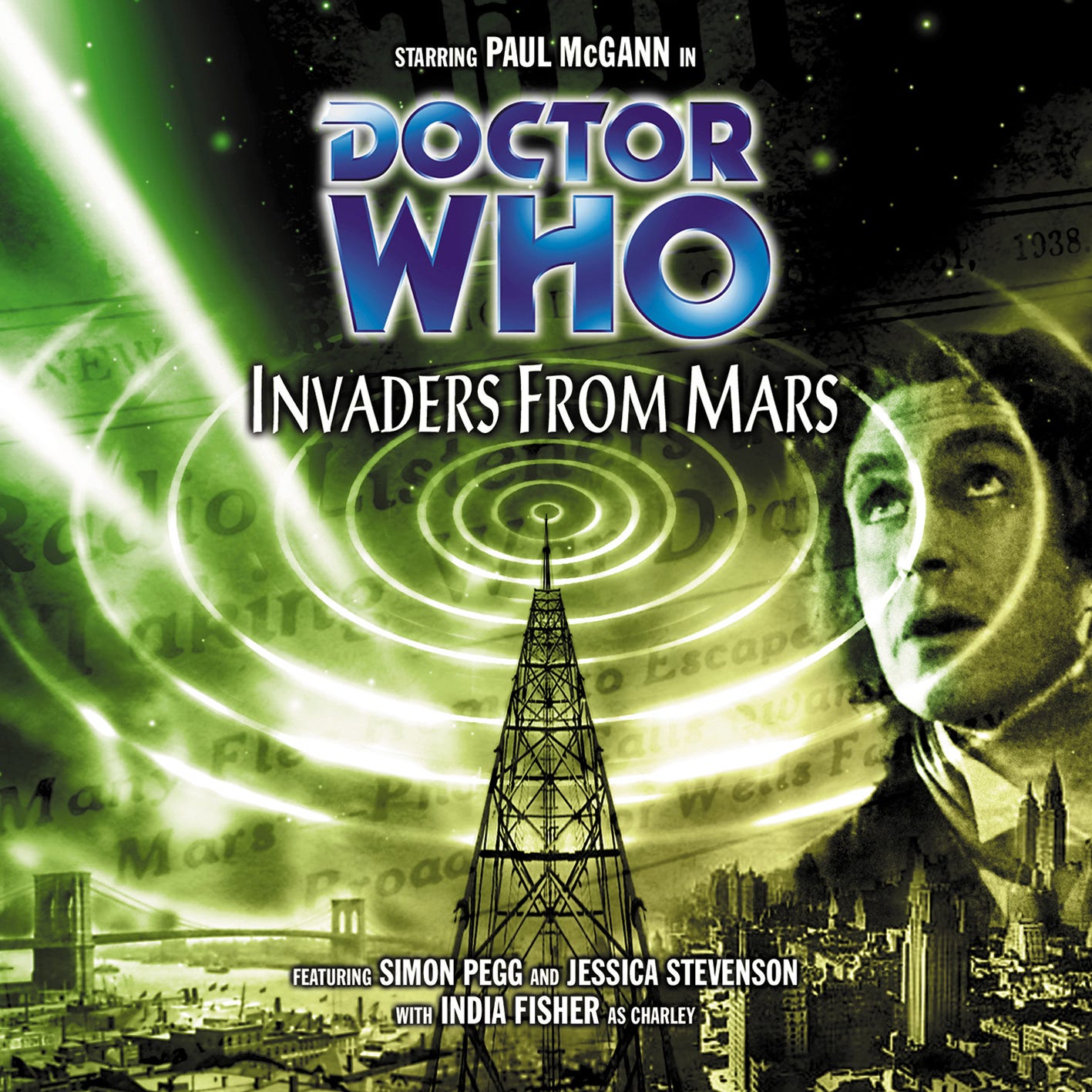

What if Doctor Who did The Sopranos in Manhattan, remembered halfway through it was supposed to be The X-Files, and by the end just let Orson Welles steal the show? That’s Invaders from Mars in a nutshell: ambitious, entertaining, occasionally hilarious, and frequently a structural shambles.
It’s the kind of story that throws everything at the wall—mob bosses, aliens, radio plays, conspiracies, double identities, triple crossings, faked accents, and one very real Orson Welles—and then sprints away before checking what actually stuck. Tonally, it’s all over the place. The first two episodes are slow and drenched in dodgy New York accents that make you wonder if the whole thing’s a private joke you’re not in on. Dialogue veers from stylised noir pastiche to outright gibberish, with characters who sound less like 1930s Americans and more like children playing gangsters at break time.
And yet, weirdly… it sort of fits the mood in fandom right now. Last week in my review of The One Doctor, I talked about how prescient that story felt: a parody about the idea of the Doctor, just as the actual show seemed to be questioning it too. It’s hilarious reading this back from last week’s review just a few days later:
“And then the wildest rumour of all: that Billie bloody Piper is about to regenerate in as the 16th Doctor.”
Nonsense, surely? Except it was true. And suddenly, I found myself squinting back over what felt like chaos, wondering whether it was always building to something clever or if Doctor Who is just making it up as it goes and somehow getting away with it.
Which, if I’m being honest, is exactly the energy Invaders from Mars is working with. I wasn’t watching the craziness of Billie Piper’s return unfold live—Dom and I were at Mighty Hoopla, dancing to the songs of our past selves. And that really fits with where Who fandom is right now. Invaders from Mars works within that madness because, like Hoopla, it’s all about duality. Hoopla celebrates who I was then (young, newly queer, still figuring things out) and where I am now (out, proud, and married to my best friend). For one weekend, it lets those versions of me meet, and that tension between past and present creates something magical.
But duality only works when there’s a central question holding it together. At Hoopla, that question is identity—who was I, who am I now, and how do they connect? Invaders from Mars has the same identity crisis baked into its DNA, but without that anchoring question. It can’t decide what it wants to be—funny or frightening, grounded or surreal, character-led or plot-driven. It’s a story caught between nostalgia and reinvention, intentions and outcomes, but unlike Hoopla’s celebration of personal growth, this duality just makes everything feel scattered.
That lack of focus is clearest in the plot. Gatiss is clearly riffing on the 1938 War of the Worlds broadcast and the cultural panic it sparked, but rather than using that as the spine of the story, it becomes just one of many threads. There are mobsters, aliens, Communist spies, fake identities, and a plot to blow up New York. There’s also a bafflingly large cast, some introduced with such gusto you assume they’ll matter, only for them to vanish or die off-page in the next scene. It’s a story that desperately needs trimming, clarifying, and deciding which of its five plotlines it actually wants to tell.
Even the central gimmick—aliens landing during the infamous Welles broadcast—undercuts itself. Their arrival is initially exciting, until they start talking like sitcom villains. There’s no mystery, no menace. They’re immediately and unnecessarily fluent in English, and any tension evaporates on impact. It’s not just that they’re silly; it’s that their silliness feels unearned, like a punchline without a setup.
The performances reflect this confusion. Paul McGann’s slightly off-kilter noir detective fantasy is a hoot, even if it belongs in a completely different story. India Fisher spends most of the time captured, recaptured, or sidelined, but when she’s given space, she’s effortlessly charming (albeit less active than in Storm Warning or The Stones of Venice, but still someone you want to spend time with). Simon Pegg turns up in a role so forgettable you’d be forgiven for missing him entirely, his accent as baffling as his character’s motivation. Jessica Hynes commits fully to her dual roles, even if one accent sounds like bad improv while nursing a head cold. Only David Benson’s Orson Welles manages to walk the tightrope between caricature and character with proper flair.
Production-wise, the soundscape tries hard but feels undercooked. The alien blasters sound borrowed from a Fisher-Price laser tag set, and the musical stings repeat so frequently they become unintentionally comedic. There’s also a moment of dated language (a homophobic slur used casually without narrative justification) that jars even more given how cartoonish everything else is.
And yet… I didn’t hate it. The Doctor’s final move is clever and satisfying, neatly tying the alien presence into the broadcast panic with a resolution that feels both thematically apt and era-appropriate. More importantly, that sheer likeability of the leads matters. McGann and Fisher sell the story even when the story forgets about them. Big Finish gets that we don’t just tune in for plots; we tune in for people we like. It’s something I’ve missed in Ncuti’s second TV run, where bland companions have left me—and, judging by the ratings, quite a few others—struggling to feel invested.
By the end, something about the sheer messiness began to feel oddly touching. Invaders from Mars is the awkward teenager of Big Finish audios—full of ideas, loud, confused, occasionally obnoxious, and desperate to impress. But there’s something endearing about that too. If The One Doctor asked who the Doctor could be, Invaders from Mars accidentally answers by showing us who he’s not. It’s a story that throws everything at the wall and runs before checking what stuck—so no, it doesn’t always work. But it’s trying. And right now, that feels familiar. Because Doctor Who on TV is doing much the same: trying to be everything at once, hoping charm and chaos will paper over the cracks. Sometimes, it even works. Sometimes, like here, it just about gets away with it—because when you actually want to spend time with the Doctor and their companion, that’s still enough.
Quick Take
Big Finish’s Invaders from Mars throws everything it can at a 1930s New York setting—mobsters, Martians, mystery, and a very real Orson Welles—but can’t quite decide what it wants to be. It’s part noir pastiche, part alien invasion, part screwball comedy… and the end result is as chaotic as that sounds.
Still, there’s a charm in the mess. Paul McGann and India Fisher remain effortlessly likeable, and there are just enough clever ideas bubbling under the surface to keep it entertaining, especially if you’re in the mood for something gloriously uneven. This one may not quite work, but it is trying, and that’s oddly touching in a week where Doctor Who on TV seems to be throwing everything at the wall too.